Monday, October 7, 2013

Angel Hair Pasta with Crabmeat, Oven-dried Tomatoes & Asparagus


For comments, please post below or email to cookingwithlarue@gmail.com

Angel Hair Pasta with Crabmeat, Oven-dried Tomatoes & Asparagus
Serves: 4
Angel Hair Pasta with Crabmeat, Oven-dried Tomatoes & Asparagus 
This is a relatively simple, yet elegant, pasta dish that is certain to impress. It always takes people by surprise. The flavor of the crab, the texture and color of caviar garnish and the bright green asparagus, make a beautiful presentation. Use your favorite seasonal crab in this dish. If you are not up to making your own angel hair pasta, buying it fresh from your local Italian grocer is fine. But, if not available, use a high quality Italian dried pasta. Oven drying the tomatoes really boosts their flavor (see after the pasta recipe for instructions). However it does require prior planning, so don't cut corners here if you can. They will keep refrigerated covered for 3-4 days so can be prepared well in advance.

To make perfectly cooked pasta, there are a few basic rules to follow. For every pound of pasta, use 4 quarts of cold water. Bring the water to a boil over high heat, add salt – enough so it “tastes like the ocean” – and when the water comes back to a rolling boil, add the pasta. Lower the heat slightly, stir the pasta with a long-handled spoon or fork, and cook until the pasta is al dente, or “firm to the tooth”. It will take a shorter time to cook freshly made pasta than dried store-bought.

I have posted numerous healthy recipes on the blog. Well, this one...not so much. But, one has to splurge sometime – and this is worth it. I would say portion control is important but it is impossible not to want to eat your entire portion.
  • 8 Tb (1 stick) unsalted butter, cut into small pieces
  • 3 Tb chopped shallots
  • 2 garlic cloves, minced
  • ½ C oven-dried tomatoes cut into bite size pieces (recipe below)
  • 2 C chicken stock
  • ½ C heavy cream
  • Kosher salt and freshly ground pepper
  • 14 oz. fresh or store-bought angel hair pasta
  • 8-10 oz. jumbo lump crabmeat
  • 1/3 C freshly grated Parmesan cheese
  • 1 Tb chopped fresh basil leaves, plus 8 whole leaves for garnish
  • ¼ C chopped fresh Italian parsley
  • 20 medium asparagus blanched, refreshed in cold water & gently dried
  • 1 Tb plus 1 tsp golden caviar, optional 
In a large skillet or sauté pan, melt the butter. Over medium heat, sauté the shallots and garlic until golden. Stir in the tomatoes and pour in the stock and cream. Season lightly with salt and pepper. Reduce by half. This can be done up to 1 hour in advance of serving.
 
The sauce....do not even think about the calories!
While the sauce is reducing, bring a large stockpot of water to boil. Add salt and stir. Angel hair pasta takes very little time to cook. If fresh, it will take 1-2 minutes. If dried, follow package directions for al dente. Drain the pasta and add it to the sauce with the crabmeat, tossing the mixture well to heat through and coat with the sauce.
 
A mound of your favorite crab--this one is Dungeness
Remove from the heat, stir in the Parmesan cheese, basil and parsley and adjust the seasoning to taste.

To blanch the asparagus, bring salted water to a boil for 3-4 min and then put directly into ice.
 
Blanched asparagus
To serve, divide and mound the pasta in the center of 4 large heated pasta bowls or plates. Place 5-6 asparagus into each mound, top each portion with 1 tsp of golden caviar if desired, and garnish with a few whole basil leaves. Serve immediately.
 
Final product, with that beautiful caviar topping
This is a truly elegant sure-to-impress entrée. It actually comes together quite quickly if the tomatoes have been oven dried in advance. If no time, and you have amazing fresh tomatoes, peel and use them.  There are several white wines that would pair well with this dish, such as a dry Chardonnay, (would avoid an oaked wine), Chablis, dry Riesling, white Burgundy or a California Sauvignon Blanc.

Bon Appetit!

Larue
Oven-dried Tomatoes
Makes about 1½ C 
  • 12-14 medium Roma tomatoes (2 lbs.)
  • 1/4-1/2 C olive oil
  • Several sprigs fresh thyme
  • 6 garlic cloves, crushed
  • ½ tsp kosher salt
  • ¼ tsp freshly ground pepper
  • ½ tsp sugar

Preheat oven to 250 degree F. Peel tomatoes with a serrated peeler. Alternatively, in a pot of boiling water, blanch tomatoes. Drain and refresh in ice water. Drain and peel. Once peeled, core and cut into quarters, removing seeds.
 
Peeling the tomatoes
Line a baking tray with parchment paper and arrange the tomato quarters on the tray, cut side down. Drizzle generously with olive oil. Sprinkle with salt, sugar and pepper and add thyme sprigs.

Bake until tomatoes begin to shrivel, about 1 hour. When the tomatoes are cool enough to handle, transfer to a container. Pour olive oil over and cover the container. Refrigerate and use as needed.
 
How they look after oven drying and covered in olive oil
Recipe is modified from Wolfgang Puck.

Monday, September 30, 2013

Red Quinoa & Forbidden Rice


Red Quinoa & Forbidden Rice
Serves 6 – 8

Red Quinoa & Forbidden Rice
Who wouldn’t want forbidden rice? According to ancient Chinese legend, black rice was so rare, tasty, and nutritious that only the emperors were allowed to eat it. It was fabled to enrich health and ensure longevity. The black color of the uncooked forbidden rice is due to its outer coating of black bran. It is also prized for its fragrant aroma, nutty taste and nutritional value. Times have changed. Although black rice is still relatively rare, researchers are trying to bring its distinctive flavor and mix of antioxidants to the masses -- or at least to a grocery store near you. Like brown rice, black rice is full of antioxidant-rich bran, which is found in the outer layer that gets removed during the milling process to make white rice. But only black-rice bran contains the antioxidants known as anthocyanins, purple and reddish pigments -- also found in blueberries, grapes, and acai -- that have been linked to a decreased risk of heart disease and cancer, improvements in memory, and other health benefits.

Forbidden Rice

I must admit I had not jumped on the “quinoa-everyday” bandwagon. It certainly has surged in popularity. Quinoa (pronounced KEEN-wah), whose edible seeds are white, red or black, is packed with protein, minerals and vitamins. It is also gluten-free, if that is a major concern. You can have it for breakfast (as a cereal), lunch (as a salad) and dinner (as a pattie or a side dish). I would eat this particular recipe at any meal. Grown in the Andes for thousands of years, the “mother grain of the Incas” was an obscurity in the U.S. until foodies who feted it as a superior alternative to bulgur wheat, couscous and rice discovered it. So, now there are even “quinoa only” cookbooks available. Though it often occupies a similar role to these grains, quinoa is actually a chenopod, in the same family as beets and chard. Who knew!

Red Quinoa

I loved this recipe so much that I made it twice in a few days. At first, simply added cremini mushrooms to base recipe and served with slice of fresh avocado. The second day I added sun-dried tomatoes, cremini mushrooms and diced red pepper finished with a sprinkling of toasted pine nuts.  If you wanted an additional protein burst, add some black beans or toasted almonds.  It is a completely flexible dish – just dig through your pantry and refrigerator liberating those additional goodies.
  • ½ C short-grain black rice
  • 1 C red quinoa, rinsed well
  • Water, vege stock or chicken stock as below
  • 1 bay leaf
  • 1 tsp kosher salt divided
  • 4 Tb olive oil, divided
  • 1 small white onion, finely chopped
  • 5 large garlic cloves, minced
  • 3 tsp cumin seeds
  • ¼ C chopped sun-dried tomatoes, optional
  • 10-12 quartered cremini mushrooms, optional
  • 1 red pepper, optional
  • 3-4 Tb fresh lemon juice
  • ¼ - ½ C chopped fresh cilantro
  • ¼ C chopped fresh flat-leaf parsley
  • 2 Tb 1” pieces chives
  • Freshly ground black pepper
  • 1 avocado, peeled and pitted, optional
  • 1 lemon, cut into wedges
  • Garnish: toasted pine nuts, or toasted almonds, drizzle of finishing olive oil; serve with hot sauce if desired.

Rinse the black rice thoroughly. Bring rice, ¼ tsp salt and 1 C water (or vegetable or chicken stock) to a boil in a small saucepan. Cover, reduce heat to low, and cook until water is absorbed and the rice is tender, 25-30 minutes. If using a rice cooker, follow instructions for brown rice.

Cooking the forbidden rice

Meanwhile, combine quinoa, bay leaf, ¼ tsp salt, and 2 C water (or vegetable or chicken stock), in a medium saucepan. Bring to a boil. Cover, reduce heat to low, and simmer until quinoa is tender, about 15 minutes. Drain; return quinoa to hot saucepan. Cover and let sit for 15 minutes. Discard bay leaf, fluff quinoa with a fork, and transfer to a large bowl.

Heat 2 Tb olive oil in a large skillet over medium heat. Add onion and cook, stirring occasionally, until soft, about 8 minutes. Add garlic and cumin seed and cook, stirring often, for 2 minutes. Remove from heat and add to quinoa. Repeat with olive oil and sautéing other optional ingredients such as cremini mushrooms and red pepper. Add chopped sun-dried tomatoes and mix all with quinoa. Add cooked black rice; mix well. Stir in 2 Tb olive oil, fresh lemon juice, cilantro, parsley and chives. Season to taste with salt and pepper.

Mixing the ingredients after cooking
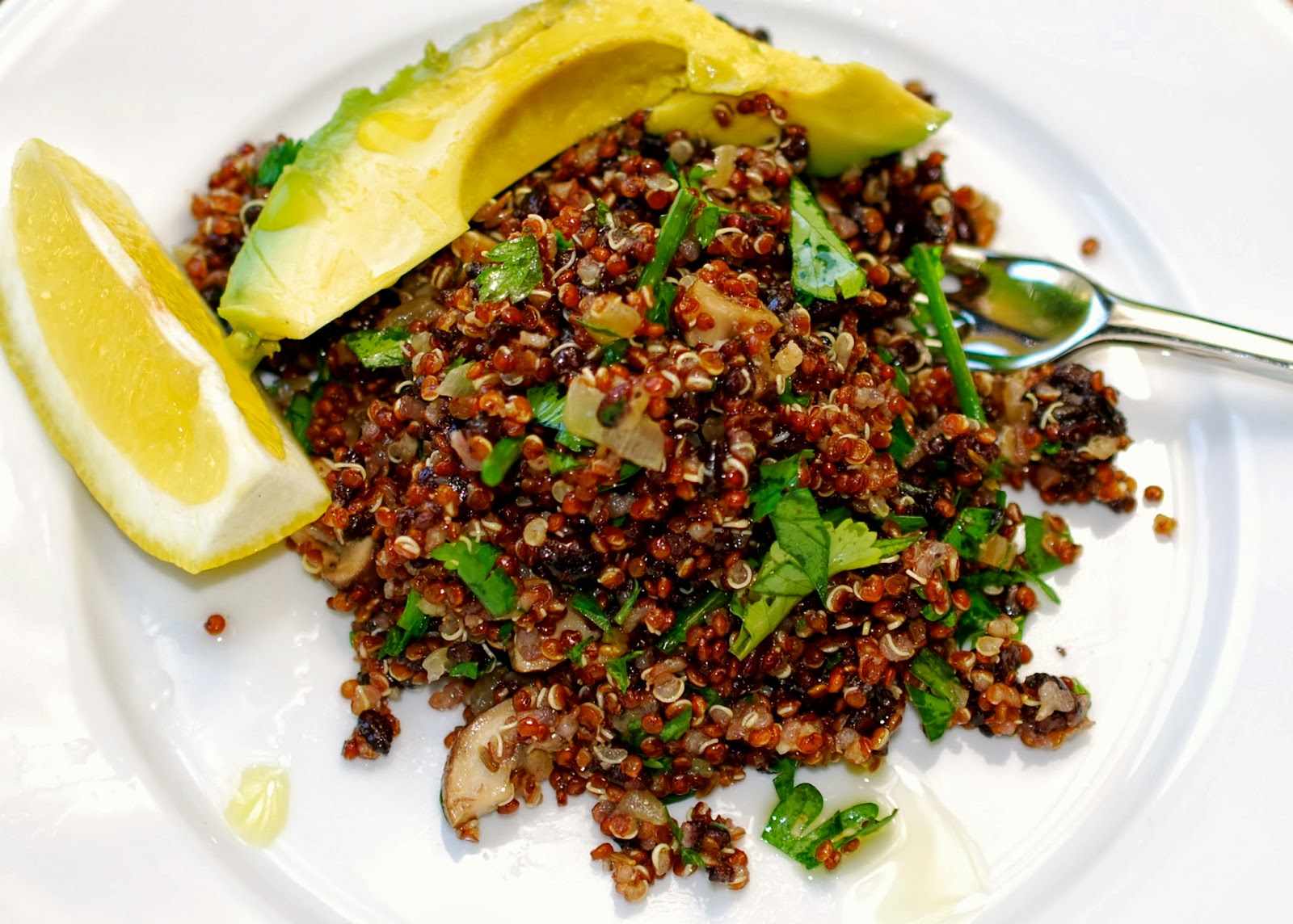
Another presentation, this time with avocado

Serve warm or at room temperature with a slice of avocado, fresh lemon slice, and sprinkle of optional toasted pine nuts or almonds. You can substitute any color of rice or quinoa to make this gorgeous (and healthful) salad, which works as a vegetarian main course or hearty side dish. Enjoy!

Larue

Monday, September 23, 2013

Sunchoke Soup with Apples & Lentils


For comments, please post below or email to cookingwithlarue@gmail.com


Sunchoke Soup with Apples & Lentils
Serves: 6
Sunchoke Soup with Apples & Lentils

Sunchokes, aka Jerusalem artichokes, are traditionally a winter beauty – for their flavor, but not their physical appearance. Squat and knobby, the tubers aren’t artichokes at all, but part of a species of sunflower that grows underground. We are blessed to find them readily available year-round. They have a nutty, sweet, crunchy flavor with subtle hints of artichoke heart and salsify. 

You do not need to peel them; the skin is edible. Simply scrub them clean under cold running water with a stiff brush. You can cook them like you would a potato; roast, boil, sauté, bake or steam. The surprising thing about these particular roots is that you can also eat them raw. They add great texture to salads and stir-fry’s. Unlike the potato, they contain little starch. It is so incredible that something so gnarly turns into something so approachable and delicious. So don't pass these craggily little roots next time you’re in the store. This is my second sunchoke recipe—the last one made it into the Huffington Post! (see http://cookingwithlarue.blogspot.com/2012/11/kabocha-squash-with-sunchokes-mushrooms.html)

The star of the show: Sunchokes

In this recipe, sunchokes are featured two ways: pureed into a silken soup, and diced and seared in a garnish that also includes black lentils, diced apples and chives. I think it is important to add a second texture to soups when you can. Otherwise palates get bored after a few bites. Before pureeing the vegetables, simmer them with just enough liquid to soften them without diluting their flavor. No extra fat or starch bogs the soup down; its creamy richness comes from the sunchoke itself and the emulsified garlic and onions.
  • ¼ C black lentils
  • Pinch of salt, plus more, to taste
  • 4 Tb olive oil (divided)
  • 1 large onion, peeled and thinly sliced
  • 1 leek, trimmed and thinly sliced
  • 4 shallots, peeled and thinly sliced
  • 5 cloves garlic, roughly sliced
  • 2 celery stalks, roughly sliced
  • 2 lbs. sunchokes – reserve 2 for garnish - peeled if you like and cut into ½ inch coins
  • 8 C vegetable stock or water
  • 1 whole star anise
  • 10 coriander seeds
  • ½ cinnamon stick
  • 1 Tb peeled, minced ginger
  • White pepper, to taste
  • ½ C apples cut into ¼ inch dice
  • 1 Tb chopped chives

Set a small pot of water, about 1 C, over high heat and bring to a boil. Add lentils and simmer until the lentils are just tender, about 15-20 minutes. Add a pinch of salt, stir, and taste for seasoning and drain. Set aside.
Uncooked lentils

Meanwhile, make the soup: set a deep pot over medium heat and swirl in 2 Tb of oil. Add onions, leeks, shallots, garlic and celery. Sweat until softened and translucent, 3-4 minutes. Add sunchokes and sweat until slightly softened, 1-2 minutes more. Add enough stock to just cover the vegetables and raise the heat to high. 

Veggies ready for the soupe
Wrap spices (star anise, coriander seeds, cinnamon stick) and ginger into a cheesecloth, secure with kitchen twine and add sachet to pot, or place all in a tea infuser and place in pot.  Once soup comes to a boil, reduce heat to medium and simmer steadily until sunchokes are fork-tender, 20-30 minutes.
Spices in the tea infuser

While vegetables simmer, assemble garnish: Peel and cut reserved sunchokes into ¼-inch dice. Set a medium pan over medium heat and swirl in remaining oil. Once hot, sauté diced sunchokes until tender and golden all over, about 5 minutes. Mix the sautéed sunchokes with cooked lentils, apples and chives. Season with salt to taste. Set aside.

Sliced sunchokes

Once vegetables have simmered, place a sieve over a large bowl and pour soup through to separate vegetables from stock. Discard sachet and reserve the stock. In a robust blender (such as Vitamix) or a food processor, puree vegetables until smooth. Return pureed vegetables to pot and stir in enough stock to create a loose yet creamy consistency. Bring mixture back to a simmer and season with salt and white pepper to taste.

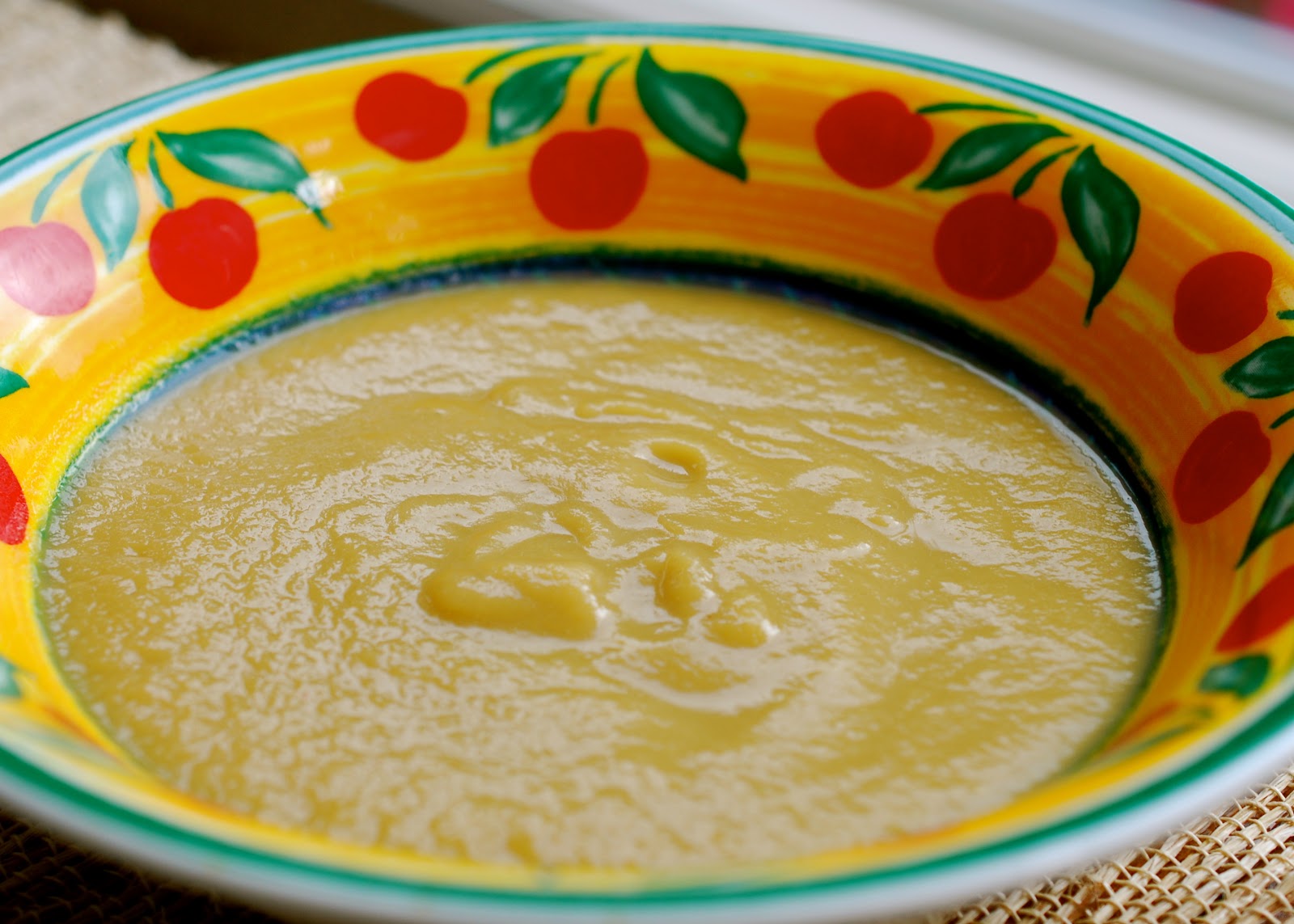
Soupe before garnish. Note the thick texture.

To serve, ladle soup into bowls and place a large spoonful of sunchoke-apple-lentil garnish in center of each bowl. Serve while hot. Other garnishes to consider: toasted pumpkin seeds, croutons, bacon, oysters, drizzle of olive oil or creamy sautéed mushrooms. They would all be delicious.


Now sit back and enjoy your creation. Nutty, buttery, sweet, earthy – sunchokes are a singular tuber that is best when focused on alone in order to appreciate the fine nuances of flavor. This is a refreshing healthy alternative to cream based soups that features lots of flavor, and very little fat.

Enjoy!

Larue